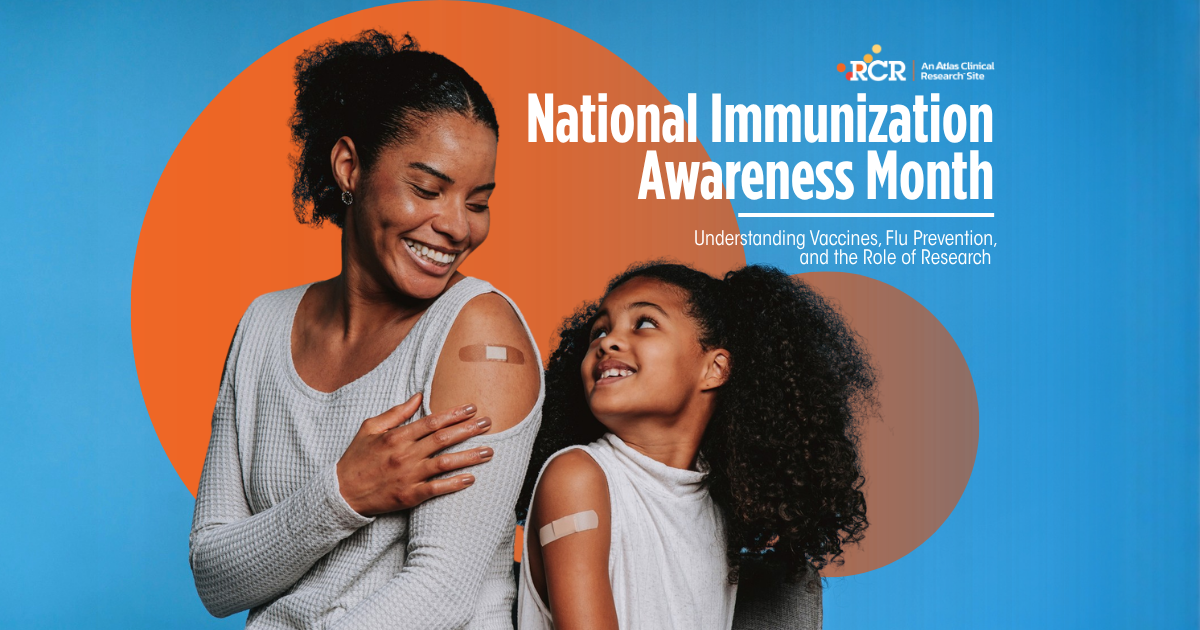
Every August, National Immunization Awareness Month highlights the importance of vaccination for people of all ages. It is an opportunity to review your vaccination history, learn about recommended vaccines, and speak with a trusted healthcare provider about questions or concerns.
Vaccines have helped prevent serious illnesses and their complications, but immunization is not only a childhood health topic. Vaccine recommendations may change throughout a person’s life based on age, medical history, occupation, travel, pregnancy, and other individual factors.
At Rochester Clinical Research, we recognize the important role clinical research plays in advancing vaccine development. As another flu season approaches, we expect to offer upcoming clinical research opportunities evaluating investigational flu vaccines.
What Is National Immunization Awareness Month?
National Immunization Awareness Month is observed each August to emphasize the importance of vaccination throughout life. It also encourages people to have informed conversations with healthcare providers about staying up to date on recommended vaccines.
Different vaccines may be recommended at different stages of life. Some provide long-lasting protection, while others may require additional or updated doses.
Vaccination recommendations may depend on factors such as:
- Age
- Previous vaccination history
- Certain medical conditions
- Pregnancy
- Workplace or community exposure
- Travel plans
- Risk of complications from an illness
- Changes in public health recommendations
Keeping an accurate vaccination record and reviewing it with a healthcare provider can help you understand which vaccines may be appropriate for you.
Understanding Seasonal Influenza
Influenza, commonly called the flu, is a contagious respiratory illness caused by influenza viruses. It primarily affects the nose, throat, and lungs.
Flu illness can range from mild to severe. Although many people recover without medical treatment, the flu can sometimes lead to serious complications, hospitalization, or death. Older adults, young children, pregnant people, and individuals with certain chronic health conditions may face a greater risk of complications.
Common flu symptoms may include:
- Fever or chills
- Cough
- Sore throat
- Runny or stuffy nose
- Muscle or body aches
- Headache
- Tiredness or fatigue
- Vomiting or diarrhea, which may occur more often in children
Not everyone with the flu will experience every symptom, and some people may have the flu without developing a fever.
Why Flu Vaccines Are Reviewed Each Year
Influenza viruses continually change. The viruses circulating during one flu season may be different from those that circulate during the next.
Because of these changes, experts review flu vaccine composition each year and update it as needed. Protection from a previous flu vaccination may also decrease over time.
The Centers for Disease Control and Prevention generally recommends annual flu vaccination for everyone 6 months of age and older, with rare exceptions. Individual recommendations may vary, so questions about vaccination should be discussed with a healthcare provider.
No vaccine prevents every case of influenza. However, flu vaccination may reduce the risk of illness and serious complications. For people who still become sick, vaccination may also help reduce the severity of the illness.
Why Is Flu Vaccination Recommended Every Year?
Influenza viruses continually change. The viruses circulating during one flu season may be different from those that circulate during the next.
Because of these changes, experts review the composition of flu vaccines each year and update them as needed to target the viruses research indicates are most likely to circulate. Protection from a previous flu vaccination can also decrease over time.
The Centers for Disease Control and Prevention generally recommends annual flu vaccination for everyone 6 months of age and older, with rare exceptions. Individual recommendations may differ, so people with questions should speak with a healthcare provider.
Flu vaccine effectiveness can vary based on:
- A person’s age
- A person’s overall health
- The influenza viruses circulating that season
- How closely the vaccine targets circulating viruses
- A person’s individual immune response
Although vaccination cannot prevent every case of influenza, it can reduce the risk of flu illness and potentially serious complications. For people who become sick after vaccination, it may also help reduce the severity of the illness.
Can the Flu Vaccine Give You the Flu?
A flu shot cannot cause influenza illness.
Flu shots are made with inactivated viruses or with individual components of the influenza virus. They do not contain live influenza viruses capable of causing the flu. Nasal spray vaccines use weakened viruses that are designed not to cause flu illness.
Some people may experience temporary side effects after vaccination, such as:
- Soreness, redness, or swelling at the injection site
- Headache
- Fatigue
- Muscle aches
- A mild fever
- Nausea
Most reported side effects are mild and go away on their own within a few days. Questions about previous vaccine reactions, allergies, or personal health conditions should be discussed with a healthcare provider.
How Clinical Vaccine Research Works
Clinical research helps doctors and scientists evaluate investigational vaccines and learn how they may affect different groups of people.
Before a vaccine or vaccine approach becomes widely available, researchers must carefully study it. Vaccine studies may evaluate:
- The safety of an investigational vaccine
- How the immune system responds
- The appropriate vaccine dose
- The recommended dosing schedule
- Common side effects
- How long an immune response may last
- How responses may differ among age groups
- Whether an investigational approach may provide additional or broader protection
Study procedures vary depending on the protocol. Participants may receive an investigational vaccine, an approved vaccine, or another comparison product.
A vaccine study may also involve:
- Health assessments
- Blood draws
- Symptom tracking
- Telephone calls
- Electronic diaries or questionnaires
- Scheduled visits with a research team
Before joining, potential participants receive information about the purpose of the study, its procedures, expected time commitment, possible risks and benefits, and their rights as research volunteers.
Clinical research participation is always voluntary. Participants can ask questions before making a decision and throughout their time in the study.
Why Flu Vaccine Research Remains Important
Seasonal flu vaccines have been studied and used for many years, but continued research remains important because influenza viruses continue to change.
Scientists are studying ways to:
- Provide broader protection against different influenza viruses
- Improve immune responses in certain age groups
- Evaluate new vaccine doses or formulations
- Explore different methods of vaccine delivery
- Provide protection that lasts longer
- Reduce the risk of serious flu-related outcomes
- Prepare for newly emerging influenza viruses
- Better understand how vaccines perform across different populations
Researchers also conduct studies each flu season to evaluate how well current vaccines protect against laboratory-confirmed influenza. Results may vary depending on the viruses circulating, the population being studied, and the outcomes researchers measure.
Many vaccines and preventive options available today were made possible because volunteers chose to participate in clinical research.
Upcoming Flu Vaccine Studies
Rochester Clinical Research expects to offer upcoming flu vaccine studies. Joining our interest list can help you be among the first to learn when enrollment begins.
Complete the interest form to let our team know you would like to hear about future studies. A member of our research team may contact you when enrollment begins and discuss whether an available opportunity could be a potential fit.
Study availability and eligibility requirements will vary. Joining the interest list does not guarantee eligibility or require participation.
Finding out if you qualify is easy and comes with no obligation.
Join the Flu Vaccine Study Interest List
Frequently Asked Questions
What is National Immunization Awareness Month?
National Immunization Awareness Month is observed each August. It highlights the importance of recommended vaccination throughout life and encourages people to speak with a trusted healthcare provider about staying up to date.
Why do people need a flu vaccine every year?
Protection from a previous flu vaccination can decrease over time, and influenza viruses continually change. The flu vaccine is reviewed and updated regularly to target viruses researchers expect to circulate during the upcoming season.
Can a flu shot cause the flu?
No. Flu shots do not contain live influenza viruses that can cause flu illness. Some people may experience mild, temporary side effects as their immune system responds.
Can someone still get the flu after being vaccinated?
Yes. No flu vaccine prevents every infection, and effectiveness varies from season to season. However, vaccination may reduce the risk of becoming sick and may reduce the severity of illness in people who still develop the flu.
Why are flu vaccines studied in clinical trials?
Clinical studies help researchers evaluate the safety of investigational vaccines, determine appropriate doses, measure immune responses, and explore whether new approaches may provide broader or longer-lasting protection.
Who may qualify for a flu vaccine study?
Eligibility varies. A study may consider a person’s age, overall health, vaccination history, medications, recent illnesses, and medical conditions. A study representative can complete an initial screening and discuss the requirements.
What happens after I join the interest list?
A member of the Rochester Clinical Research team may contact you when an appropriate study begins enrolling. The team may review basic eligibility questions, provide information about the study, and explain possible next steps.
Will I have to participate after joining the interest list?
No. Joining the interest list does not require you to participate. Clinical research participation is voluntary, and you can decide whether the opportunity is right for you after learning more.
Is an investigational vaccine guaranteed to work?
No. An investigational vaccine is still being evaluated, and researchers may not yet know how well it will work. The research team will explain the available information and potential risks before you decide whether to join.
Will there be a cost to participate?
Qualified participants generally receive study-related care at no cost. Compensation for time and travel may also be available, depending on the study. The research team will explain any study-specific compensation during the screening process.
Sources
Centers for Disease Control and Prevention. “National Immunization Awareness Month.”
https://www.cdc.gov/vaccines/php/national-immunization-awareness-month/index.html
Centers for Disease Control and Prevention. “Healthy Habits to Prevent Flu.”
https://www.cdc.gov/flu/prevention/actions-prevent-flu.html
Centers for Disease Control and Prevention. “Seasonal Flu Vaccine Basics.”
https://www.cdc.gov/flu/vaccines/index.html
U.S. Food and Drug Administration. “The Path for Vaccines: From Research to FDA Approval.”
https://www.fda.gov/media/151716/download
National Institutes of Health. “NIH Clinical Research Trials and You.”
https://www.nih.gov/health-information/nih-clinical-research-trials-you