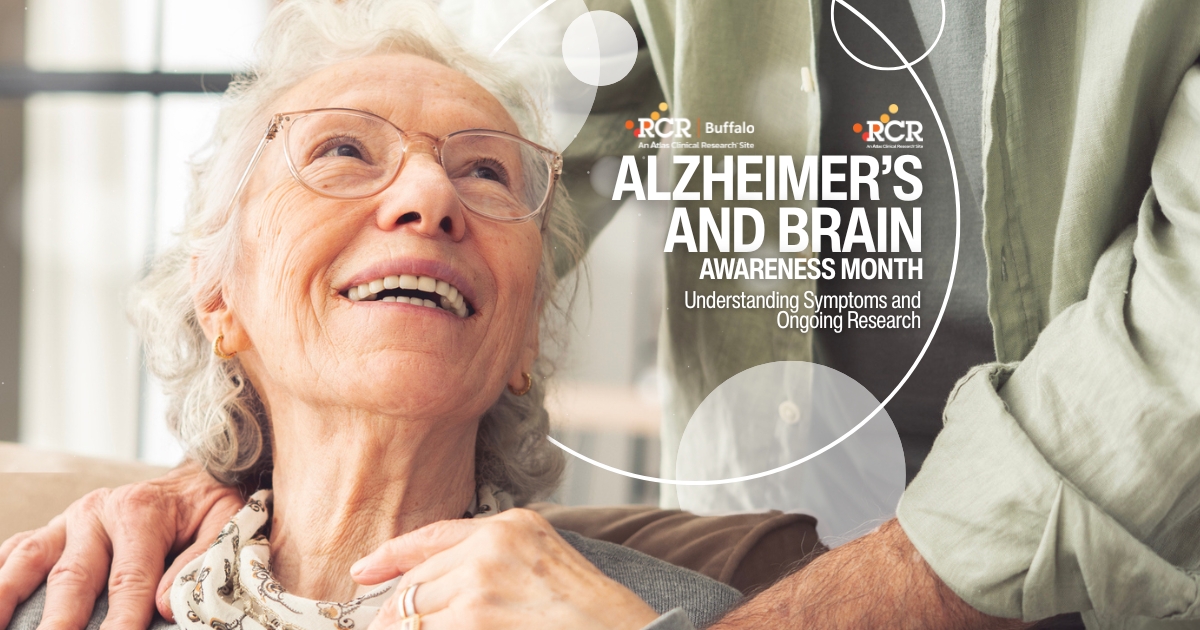
Every June, Alzheimer’s & Brain Awareness Month brings attention to one of the most important health challenges facing families today.
Alzheimer’s disease affects memory, thinking, behavior, and independence. For many families, the impact extends far beyond the person diagnosed. Spouses, children, caregivers, and loved ones often face difficult decisions as symptoms progress and daily routines change.
At Rochester Clinical Research, we recognize the important role clinical research plays in advancing our understanding of Alzheimer’s disease and other neurological conditions. During Alzheimer’s & Brain Awareness Month, we’re highlighting why research continues to be essential for improving diagnosis, treatment, and care for future generations.
Understanding Alzheimer’s Disease
Alzheimer’s disease is the most common cause of dementia. It is a progressive brain disease that affects memory and cognitive function over time. Common symptoms may include:- Forgetting recently learned information
- Repeating questions or conversations
- Difficulty completing familiar tasks
- Confusion about dates, time, or locations
- Trouble finding the right words
- Changes in mood, judgment, or personality
Why Alzheimer’s Awareness Matters
According to the Alzheimer’s Association, an estimated 7.4 million Americans age 65 and older are living with Alzheimer’s disease in 2026. Many families have experienced the challenges that come with memory loss, whether as a patient, caregiver, spouse, child, or friend. Awareness helps people recognize symptoms earlier, start conversations with their healthcare providers, and learn about available support and research opportunities.How Clinical Research Helps Move Medicine Forward
Many of today’s medical treatments exist because individuals chose to participate in clinical research. Researchers continue working to better understand:- What causes Alzheimer’s disease
- How the disease develops in the brain
- How Alzheimer’s may be detected earlier
- Whether investigational treatments may help slow progression
- Ways to improve quality of life for patients and caregivers
Research Has Changed What We Know About Alzheimer’s
Over the last several years, researchers have made significant progress in understanding Alzheimer’s disease. Studies are exploring:- Brain imaging technology
- Blood-based biomarkers
- Early detection methods
- Investigational medications
- Cognitive assessments
- Prevention and risk-factor research
Who Can Participate in Alzheimer’s Research?
Every clinical study has different eligibility requirements. Some studies may be looking for:- Adults experiencing memory concerns
- Individuals diagnosed with Mild Cognitive Impairment (MCI)
- Adults living with early Alzheimer’s disease
- Healthy volunteers interested in advancing research
- Caregivers or study partners who can participate alongside a loved one
Why Participation Matters
Many medical breakthroughs begin with people in local communities who choose to participate in research. When individuals participate in clinical trials, they help researchers gather information that may improve future diagnosis, treatment, and care. For some families, research participation is also an opportunity to become actively involved in the search for better options for future generations.Clinical Research and Brain Health
Clinical research has helped improve what we know about Alzheimer’s disease, from identifying risk factors to developing new approaches for diagnosis and treatment. Research sites across the country contribute to medical progress by participating in studies that help researchers better understand a wide range of health conditions. At Rochester Clinical Research, we are proud to support clinical research and the volunteers who make medical advancements possible. Research participation has helped shape many of the treatments and healthcare practices available today. Every advancement in medicine begins with people who are willing to take part in research.FAQs
What is the difference between Alzheimer’s disease and dementia?
Dementia is a general term used to describe symptoms that affect memory, thinking, and daily functioning. Alzheimer’s disease is the most common cause of dementia, accounting for an estimated 60% to 80% of dementia cases.What are the early signs of Alzheimer’s disease?
Some early signs may include:- Forgetting recently learned information
- Repeating questions or stories
- Misplacing items frequently
- Difficulty completing familiar tasks
- Trouble finding the right words
- Changes in judgment or decision-making
Is memory loss a normal part of aging?
Some mild forgetfulness can occur as people age. However, Alzheimer’s disease is not a normal part of aging. Memory loss that interferes with daily activities, relationships, or independence should be evaluated by a healthcare professional.Can Alzheimer’s disease be prevented?
There is currently no proven way to prevent Alzheimer’s disease. However, research suggests that healthy habits such as regular exercise, managing blood pressure, getting quality sleep, maintaining social connections, and staying mentally active may support overall brain health.Why is Alzheimer’s research important?
Clinical research helps scientists better understand Alzheimer’s disease and evaluate potential new approaches to diagnosis, treatment, and prevention. Every approved treatment available today was made possible because volunteers participated in clinical research studies.What happens during an Alzheimer’s clinical trial?
Every study is different. Depending on the study, participants may complete:- Memory assessments
- Physical exams
- Blood tests
- Brain imaging
- Questionnaires
Study visits with research professionals
The study team will explain all procedures before participation begins.Who can participate in Alzheimer’s research studies?
Eligibility varies by study. Some studies may be looking for:- Adults with memory concerns
- Individuals diagnosed with Mild Cognitive Impairment (MCI)
- Adults living with early Alzheimer’s disease
- Healthy volunteers
- Caregivers or study partners