

The holidays are a time for family, friends, traditions, and delicious food. From Thanksgiving dinner to holiday cookies and festive gatherings, many of our favorite memories involve sharing meals with the people we care about.
But if you’re working toward weight management goals, the holiday season can also bring challenges. Between busy schedules, larger meals, and sweet treats, maintaining your usual healthy eating habits may feel more difficult.
The good news? Healthy eating during the holidays doesn’t mean giving up your favorite foods or following a strict diet.
Small, realistic changes can help you enjoy the season while supporting your health and weight management goals.
Whether you’re trying to manage your weight, improve your eating habits, or simply feel your best, these eight healthy holiday eating tips can help you find a balance that works for you.
 For example, your holiday dinner might include roasted turkey or another protein, green beans or carrots, sweet potatoes, and a serving of your favorite stuffing.
You don’t need to measure every portion or follow these proportions at every meal. Think of them as a flexible guide.
Use this plate as a flexible starting point, not a rule you have to follow at every meal.
Want more simple ways to build balanced meals? Explore our article, Simple Nutrition Tips for Healthier Eating, for practical advice from our registered dietitian, including easy ways to add more fruits, vegetables, whole grains, and fiber to your everyday meals.
 Consider taking a walk with family, dancing to holiday music, stretching at home, or playing outside with children or grandchildren.
A short walk after a meal can be a simple way to spend time together.
Regular physical activity also supports cardiovascular health. To learn more, read our article on everyday habits that support heart health.
Choose movement that feels comfortable and fits your abilities.
1. Build a Balanced Holiday Plate
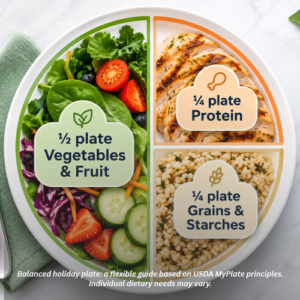
One of the easiest ways to make healthier food choices is to include a variety of foods on your plate. A simple approach is to fill about half your plate with vegetables and fruit, one-quarter with protein, and one-quarter with whole grains or other starchy foods.
For example, your holiday dinner might include roasted turkey or another protein, green beans or carrots, sweet potatoes, and a serving of your favorite stuffing.
You don’t need to measure every portion or follow these proportions at every meal. Think of them as a flexible guide.
Use this plate as a flexible starting point, not a rule you have to follow at every meal.
Want more simple ways to build balanced meals? Explore our article, Simple Nutrition Tips for Healthier Eating, for practical advice from our registered dietitian, including easy ways to add more fruits, vegetables, whole grains, and fiber to your everyday meals.
Try this: Add one vegetable side dish to your plate, then choose the holiday favorites you enjoy.
2. Avoid Skipping Meals to Save Calories
If you’re looking forward to a large holiday dinner, you might be tempted to skip breakfast or lunch. However, skipping meals can leave you feeling very hungry later in the day. For some people, this may lead to eating more than they planned. Instead, try maintaining a regular eating schedule. A breakfast that includes protein and fiber, such as eggs with whole-grain toast or oatmeal with yogurt, can be a satisfying way to start your day. If your holiday meal is later than usual, consider having a snack, such as fruit, nuts, or yogurt. Regular meals can help you arrive at the gathering comfortably hungry instead of being overly hungry.Try this: Eat your usual breakfast, and pack fruit or yogurt if dinner will be late.
3. Enjoy Your Favorite Holiday Foods
Holiday traditions often revolve around food, and there’s no reason you can’t enjoy your favorite dishes while working toward healthier habits. Whether you love pumpkin pie, mashed potatoes, homemade cookies, or a special family recipe, these foods can fit into an overall balanced eating pattern. Instead of labeling foods as “good” or “bad,” try choosing foods you truly enjoy, eating slowly, and paying attention to your hunger and fullness. Enjoy the foods that make the celebration meaningful to you.Try this: Pick one or two favorite holiday dishes and take time to enjoy them.
4. Add More Fruits, Vegetables, and Fiber
Fruits, vegetables, and whole grains provide important nutrients that support your overall health. Many of these foods also contain fiber, which supports digestive health and can help you feel satisfied after eating. The holidays offer plenty of opportunities to add more nutritious foods to your meals. Consider roasted Brussels sprouts, green beans with herbs, a colorful winter salad, fresh fruit with breakfast, or whole-grain side dishes. You can also make small changes to traditional recipes, such as adding extra vegetables to stuffing or serving fruit alongside dessert. You can keep familiar holiday recipes and add a colorful side dish.Try this: Bring a colorful vegetable dish or fruit platter to your next gathering.5. Stay Hydrated During Busy Holiday Days Between shopping, traveling, cooking, and attending holiday gatherings, it’s easy to forget to drink enough water. Water helps your body function properly and supports normal digestion. Try keeping a reusable water bottle nearby, drinking water with meals, or adding lemon, berries, or cucumber for flavor. Choosing water or unsweetened beverages more often can also help reduce added sugar from drinks. If you have a medical condition that requires you to limit fluids, follow your healthcare provider’s recommendations.
Try this: Fill a reusable water bottle before heading out to shop or visit family.6. Make Physical Activity Part of Your Holiday Routine Movement can be a fun part of holiday gatherings, too.
Consider taking a walk with family, dancing to holiday music, stretching at home, or playing outside with children or grandchildren.
A short walk after a meal can be a simple way to spend time together.
Regular physical activity also supports cardiovascular health. To learn more, read our article on everyday habits that support heart health.
Choose movement that feels comfortable and fits your abilities.
Try this: Invite someone for a 10-minute walk after dinner, if that works for you.
7. Prioritize Sleep and Manage Holiday Stress
The holiday season can be exciting, but it can also be stressful. Travel, shopping, family commitments, and changing schedules may affect your sleep and daily routines. Busy holiday schedules can make everyday routines harder to keep. Try preparing one dish the day before a gathering, leaving a little time to unwind before bed, or saying no to an extra commitment when your schedule is full. Even one small change may make the week feel more manageable.Try this: Prepare one item the night before a gathering to make the next day less rushed.
8. Focus on Progress, Not Perfection
Healthy eating isn’t about making perfect choices every day. A flexible routine is easier to return to after a busy day. If you enjoy a larger holiday meal or an extra dessert, there’s no need to feel guilty or skip your next meal. Instead, return to your usual routine and continue making choices that support your health. What matters more is what you do regularly over time.Try this: After a bigger-than-usual meal, return to your normal routine at the next meal.